Category: charter schools

  • Red Ribbon Week: How Schools Build Healthy Habits

    Red Ribbon Week: How Schools Build Healthy Habits

    Every fall, schools across the country fill with red ribbons, crazy sock days, and spirit week fun. That is Red Ribbon Week, and it happens each year from October 23 to 31. Behind the playful dress-up days is a serious and hopeful message: helping kids make healthy, drug-free choices.

    Here is what Red Ribbon Week is, where it came from, and how families can keep its message going at home.

    The History of Red Ribbon Week

    Red Ribbon Week honors Enrique “Kiki” Camarena, a U.S. Drug Enforcement Administration agent who was killed in the line of duty in 1985. Before joining the DEA, he served in the Marines and worked as a firefighter and police officer.

    After his death, people in Calexico, California, where he grew up, began wearing red ribbons to honor him and to stand against drug use. The idea spread from community to community. Then, in 1988, the National Family Partnership organized the first national Red Ribbon Week. Today, it is one of the largest drug prevention campaigns in the country.

    The 2026 Red Ribbon Week Theme

    Each year, students help choose the theme through a national contest. The 2026 theme is “Make a Difference. Be a Hero. Stay Drug Free.” It was created by a sixth grader, which makes it a great conversation starter for kids. After all, a student their age came up with it.

    Why Red Ribbon Week Matters

    At first glance, drug prevention might seem like a topic for teenagers. However, the habits that protect kids later in life start much earlier. Specifically, Red Ribbon Week helps children practice:

    • Making healthy choices for their bodies and minds
    • Saying no with confidence
    • Talking with trusted adults about hard topics
    • Standing up for themselves and their friends

    These are life skills. Kids who practice them in elementary and middle school carry them into high school and beyond.

    How Schools Celebrate Red Ribbon Week

    Most schools mark the week with spirit days that make the message fun and memorable. For example, schools might host:

    • Wear red day to show support for a drug-free life
    • Crazy sock day with a theme like “Sock it to drugs”
    • Team jersey day for “Team drug-free”
    • Pledge walls where students sign a promise to make healthy choices

    In a K-8 school, the week has an extra benefit. Older students can lead activities and model healthy choices for younger ones. When a 5th grader sees an 8th grader take a stand, it sticks.

    Red Ribbon Week Through the Arts

    As a Fine Arts charter school, we love when healthy habits and creativity come together. Students might design posters, write songs, or create art that shares the theme in their own voice. Creating something personal helps the message feel real.

    How Families Can Support Red Ribbon Week at Home

    Red Ribbon Week lasts nine days, but its message works best all year. Here are simple ways to keep it going:

    1. Talk early and often. Short, honest conversations are more effective than one big talk.
    2. Ask about the theme. Use “Make a Difference. Be a Hero.” as a starting point. Ask your child what being a hero means to them.
    3. Practice what to say. Role-play simple ways to say no, like “No thanks, I have to get home.”
    4. Model healthy habits. Kids notice how adults handle stress, rest, and health.
    5. Stay involved. Know your child’s friends and keep the door open for questions.
    6. Encourage healthy passions. Art, music, sports, and clubs give kids confidence and a strong sense of who they are.

    Above all, let your child know they can always come to you, no matter what.

    Building Healthy Habits at Academy Del Sol

    At Academy Del Sol, we believe healthy habits and strong character grow alongside academics. Our students find their voice through art, music, and performance, and that confidence helps them make good choices. Because we serve kindergarten through 8th grade, children grow up in one supportive community, surrounded by adults who know them by name.

    Academy Del Sol has served Tucson families since 2009. We are a tuition-free K-8 Fine Arts charter school with campuses in west Tucson and central Tucson. Want more ideas for partnering with your child’s school? Read our post on parent-teacher conference questions.

    Apply Now for 2026-27

    Academy Del Sol is a tuition-free K-8 Fine Arts charter school serving Tucson families since 2009. Come see us in action.

    • Star Valley campus (Firebirds), west Tucson: 7102 W. Valley Crest Pl. | (520) 789-7731
    • Roger Road campus (Roadrunners), central Tucson: 732 W. Roger Rd. | (520) 325-2800

    Apply Now: https://academydelsol.com/contact

    Where Every Child Shines.
  • What Makes a Great Kindergarten Classroom in Tucson?

    What Makes a Great Kindergarten Classroom in Tucson?

    The first time you walk into a kindergarten classroom, it can feel like a lot. Tiny chairs, bright walls, a reading rug, and a room full of busy kids all talking at once. So how do you tell a good room from a great one?

    If you are choosing a kindergarten classroom in Tucson for your child, the answer is less about the decorations and more about what happens inside those walls every day. Here is what to look for, plus how we approach kindergarten at Academy Del Sol.

    First, a quick timing note. In Arizona, a child is ready for kindergarten if they turn 5 before September 1 of that school year. Many families start looking a full year ahead, so it is never too early to learn what matters.

    1. Warm, Predictable Routines

    Five-year-olds thrive on knowing what comes next. In a strong kindergarten classroom, you will notice a clear rhythm to the day. For example, there might be a morning circle, a reading block, hands-on centers, snack, recess, and a calm wind-down.

    Routines like these are not about being strict. Instead, they help young kids feel safe. When children know what to expect, they spend less energy worrying and more energy learning.

    What to look for: a posted daily schedule with pictures, calm transitions, and a teacher who greets each child by name.

    2. Reading and Math Foundations, Built Through Play

    Kindergarten is where the building blocks of reading and math take shape. Phonics, letter sounds, counting, and shapes all matter. However, at this age, the best learning rarely looks like a worksheet.

    In a great kindergarten classroom in Tucson, kids sing letter sounds, sort colored blocks, count steps on the playground, and act out stories. As a result, skills stick because children are using their whole bodies and imaginations to learn them.

    What to look for: books everywhere, hands-on materials kids can reach, and plenty of talking and questions.

    3. Art and Music Every Day, Not Once a Week

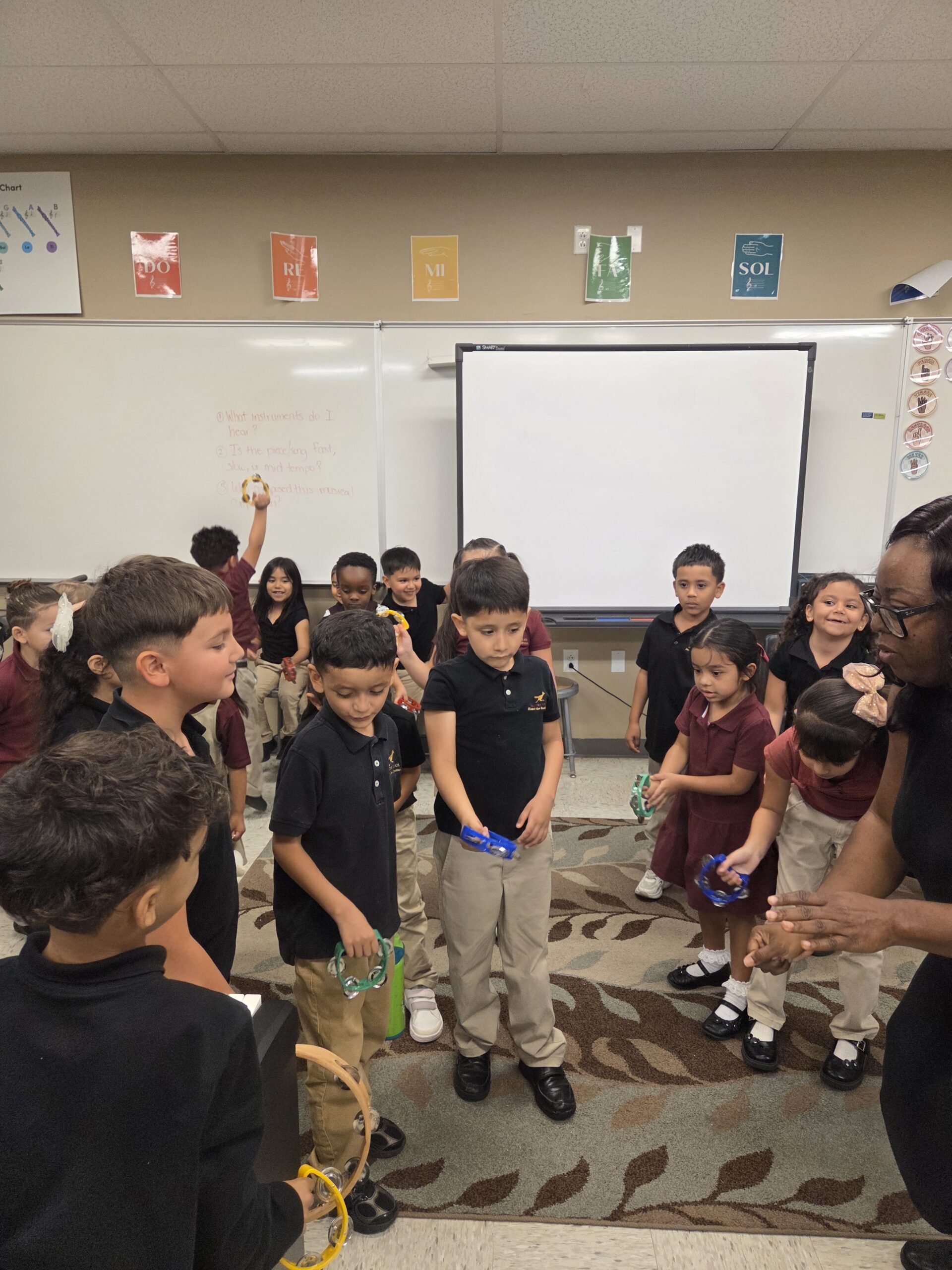
    This is where our school looks a little different. At Academy Del Sol, fine arts are not a special that shows up on Friday. Rather, art, music, and movement are woven into the kindergarten day.

    A typical day might include morning circle, phonics, art, music, and recess under the Tucson sky. For instance, a counting lesson might turn into a clapping rhythm, and a story might end with students painting their favorite scene. Because of this, kids who are still finding their voice often discover it through a song or a drawing first.

    If you are wondering whether a fine arts school still teaches the basics, the short answer is yes. The arts are simply one of the ways we teach them. Learn more on our Fine Arts page.

    4. Room to Grow Socially and Emotionally

    Kindergarten is often a child’s first time sharing a classroom all day. Learning to take turns, handle big feelings, and make friends is just as important as learning to read.

    In a great classroom, teachers help kids name their feelings and solve small problems together. Likewise, kids get chances to lead, help a classmate, and feel proud of their work.

    What to look for: a cozy calm-down spot, kind language from adults, and kids who seem comfortable asking for help.

    5. A Teacher Who Knows Your Child

    Above all, a great kindergarten classroom in Tucson is one where the teacher truly knows your child. That means noticing when they need a challenge, when they need a hug, and when they need a little more time.

    At our school, that relationship can last. Both campuses serve kindergarten through 8th grade, so the teacher who welcomes your kindergartner on day one is often still cheering at their 8th grade promotion.

    6. A Real Partnership With Families

    Finally, great kindergarten classrooms treat parents as partners. Look for regular updates, easy ways to reach the teacher, and events where families are welcome. At the Roger Road campus in particular, families find a bilingual welcome that helps everyone feel at home.

    Questions to Ask in Any Kindergarten Classroom in Tucson

    When you visit any kindergarten classroom in Tucson, bring a short list of questions:

    • What does a typical kindergarten day look like?
    • How do you teach reading and early math?
    • How often do kids get art, music, and movement?
    • How do you support kids who need more help, or more challenge?
    • How will you communicate with me about my child?

    For more ideas, see our post on 5 questions to ask when touring a charter school, and check out our kindergarten readiness checklist for Tucson parents.

    Kindergarten at Academy Del Sol

    Academy Del Sol has offered tuition-free kindergarten in Tucson since 2009, at two campuses:

    • Star Valley (Firebirds), West Tucson: 7102 W. Valley Crest Pl., (520) 789-7731. Visit Star Valley.
    • Roger Road (Roadrunners), Central Tucson: 732 W. Roger Rd., (520) 325-2800. Visit Roger Road.

    Want the full picture? Read our overview of Tucson charter kindergarten, or contact us to learn more about kindergarten at either campus.

    Bright Minds. Brighter Futures.

  • Why a Small School in Tucson Helps Kids Thrive

    Why a Small School in Tucson Helps Kids Thrive

    Picture pickup time. Your child walks out, and a teacher calls out their name, mentions the drawing they finished, and asks about their little sister. That small moment tells you something big. Your child is not a number here. They are known.

    For many Tucson families, that feeling is the whole reason to look at a small school. A small school in Tucson can give kids something that is hard to measure on a report card: the steady sense that the adults around them are paying attention. As a result, kids feel safe enough to try, stumble, and try again.

    Here is what that looks like day to day, and why it matters so much for growing kids.

    Being Known by Name Changes How Kids Learn

    Children do their best learning when they feel seen. When a teacher knows your child well, that teacher notices the small things. For example, they catch the day a confident reader goes quiet, or the week a shy student finally raises a hand.

    Because of that, support can start early instead of waiting for a problem to grow. A quick check-in, a new seat, or a call home often solves things before they snowball. In other words, being known is not just a nice feeling. It is how kids get the right help at the right time.

    A Small School in Tucson Builds Nine Years of Relationships

    At Academy Del Sol, both campuses serve kindergarten through 8th grade. That K-8 continuity is one of the quiet strengths of a small school in Tucson. Instead of changing buildings after 5th grade, students grow up in one community.

    As a result, relationships have years to deepen. The teacher who welcomes your kindergartner on day one is often still cheering at their 8th grade promotion. Older students look out for younger ones. Meanwhile, families get to know each other at concerts, games, and pickup lines year after year.

    If you want to learn more about how the grades fit together, our post on choosing a K-8 school in Tucson walks through it step by step.

    The Arts Give Every Kid a Way In

    Of course, being known also means being seen for what makes your child unique. That is where fine arts come in. At our Fine Arts charter school, art, music, and performance are not a once-a-week extra. Instead, they are woven into how students learn every day.

    Specifically, the arts give many kids a way into school that worksheets alone cannot. A child who struggles to speak up in class might shine on stage. Likewise, a student who is still finding their footing in math might light up while building rhythm patterns in music. When teachers see a child succeed in one area, they can use that spark to build confidence everywhere else.

    Curious how it works in practice? Visit our Fine Arts page or read more about what makes a fine arts charter school in Tucson different.

    Families Are Part of the Community, Too

    A small school in Tucson is not only about the students. It is also about families. Parents are welcomed as partners, and staff take time to learn who you are and what your child needs.

    That welcome includes language. Especially at our Roger Road campus, families find a bilingual welcome from the front office to the classroom. You can read more in our post about bilingual schools in Tucson.

    In addition, there are plenty of ways to stay involved:

    • Student art shows, concerts, and performances throughout the year
    • Parent-teacher conferences where teachers truly know your child
    • Volunteer and event opportunities through our Get Involved page
    • Everyday conversations at drop-off and pickup

    Support That Fits Your Child

    Every child needs something a little different. Some need a bigger challenge. Others need extra support to catch up or keep pace. In a close-knit school, that support feels personal, because the people providing it already know your child.

    If your child needs additional learning support, our Special Education page explains how our team works alongside families. Naturally, the goal is the same for every student: steady growth and a real sense of belonging.

    Two Tucson Campuses, One Community

    Academy Del Sol has served Tucson families since 2009 with two campuses:

    Both campuses offer tuition-free K-8 education with the same fine arts heart. Finally, both share the same belief: every child deserves to be known.

    Learn More About Academy Del Sol

    If you are looking for a small school in Tucson where your child will be known by name, we would love to answer your questions. Reach out to either campus by phone, or contact us here to learn more.

    Where Every Child Shines.