Category: Art

  • Screen Time and Creativity: Finding the Balance

    Screen Time and Creativity: Finding the Balance

    Where Futures Rise.

    5-minute read · For Tucson families

    The short answer

    Screen time and creativity can live together, but kids need regular time away from screens to imagine, build, and make things with their hands. Set predictable screen limits, keep simple art supplies within reach, and swap some passive watching for creating. Daily arts at school help, too.

    Raise your hand if “just five more minutes” has ever turned into an hour. Same here.

    Screen time and creativity are one of the most common topics Tucson parents bring up with us. Screens are part of modern life, and plenty of what kids watch is great. However, creativity grows best when kids have room to get bored, pick up a crayon, and make something no one asked them to make.

    Here is a realistic, guilt-free approach to finding the balance.

    What Screen Time and Creativity Have to Do With Each Other

    Most screen time is about receiving: watching, scrolling, tapping through someone else’s ideas. Creativity, on the other hand, is about producing. When kids draw, build, act out a story, or make up a song, they practice problem solving, patience, and flexible thinking.

    Of course, not all screen time is the same. A video call with grandma or a stop-motion project is very different from autoplay. The goal is not zero screens. Instead, the goal is enough unplugged time for imagination to kick in.

    How Much Screen Time Is Reasonable?

    The American Academy of Pediatrics suggests limiting screen use for children ages 2 to 5 to about one hour a day of high-quality programming, and setting consistent limits for older kids through a family media plan. In other words, every family’s number will look a little different, and that is okay.

    10 Easy Swaps That Boost Creativity

    1. Create a “maker basket.” Paper, tape, markers, and recycled boxes in one easy spot.
    2. Start a family sketchbook. Everyone draws one thing from their day.
    3. Turn on music, not a show. Dance, drum on pots, or make up lyrics.
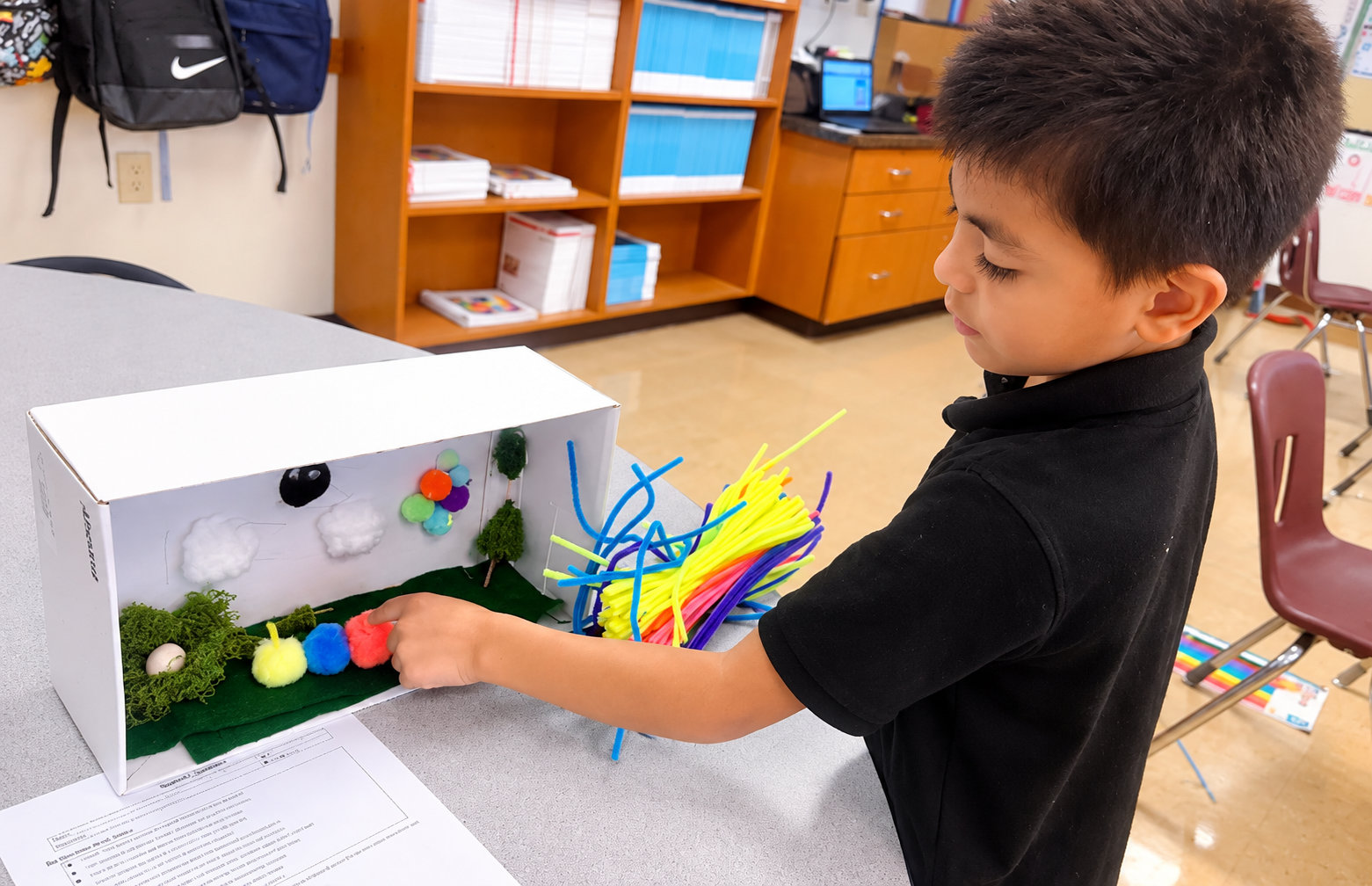
    4. Build a cardboard world. Forts, cities, and marble runs count as engineering.
    5. Put on a living room play. Kids write it, cast it, and sell “tickets.”
    6. Go outside with a purpose. Collect desert leaves or rocks for a collage.
    7. Cook something together. Measuring and decorating are creative work.
    8. Use screens to make. Try a stop-motion video or record a family song.
    9. Keep a boredom list. When kids say “I’m bored,” they pick from their own ideas.
    10. Model it. Put your own phone down and doodle alongside them.

    Try this: Make screens the “after” instead of the “instead.” Creative time first, then screen time. Kids adjust faster than you expect.

    How Daily Arts at School Support Screen Time and Creativity Balance

    At Academy Del Sol, the arts are part of the school day, not an extra. Students sing, draw, perform, and create every week, so they practice creative thinking even on busy days at home. Read more about our Fine Arts program and what arts integration really means.

    As a result, families often notice their kids bringing that creative energy home, with songs from music class and art projects that keep growing on the kitchen table.

    Frequently Asked Questions

    Does screen time hurt creativity?

    Too much passive screen time can crowd out the unstructured play where creativity grows. Balanced screen use, plus regular time to draw, build, and play, supports healthy creative development.

    How much screen time should young kids have?

    The American Academy of Pediatrics suggests about one hour a day of high-quality programming for children ages 2 to 5, and consistent family limits for older children.

    What are easy creative activities to replace screen time?

    Try a maker basket of art supplies, a family sketchbook, music and dance, cardboard building, living room plays, and cooking together.

    Find a School Where Creativity Is Part of Every Day

    Academy Del Sol is a tuition-free K-8 Fine Arts charter school in Tucson. The best way to know if Academy Del Sol fits your family is to walk through a campus. Reach out to schedule a tour, and bring your questions.

    • Star Valley Campus (K-8, Firebirds): 7102 W. Valley Crest Pl., Tucson, AZ | (520) 789-7731
    • Roger Road Campus (K-8, Roadrunners): 732 W. Roger Rd., Tucson, AZ | (520) 325-2800

    Apply Now | Learn more: academydelsol.com | Hablamos español.

    Less scrolling, more creating. Creativity, the ADS way.
  • Arts and Academic Achievement: How the Arts Support Math and Reading

    Arts and Academic Achievement: How the Arts Support Math and Reading

    Parents often hear that art and music are “good for the brain.” But what does that really mean? And what does the research actually say about the arts and academic achievement? The honest answer is encouraging, even if it is a little more nuanced than a headline.

    In this post, we share what studies show, in plain language, and how art and music connect to the reading and math skills children use every day.

    What Research Says About the Arts and Academic Achievement

    One of the strongest studies on arts education comes from Houston. Researchers followed more than 10,000 students across 42 schools in a randomized study of the city’s Arts Access Initiative. Students at schools that received more arts learning experiences saw real benefits.

    Specifically, the study found:

    • Fewer discipline problems at school
    • Stronger writing scores
    • More compassion for others
    • Higher engagement and college aspirations among elementary students

    Notably, the Houston study did not find measurable changes in math, reading, or science test scores during the two years it tracked. That matters. Arts education is not a shortcut to higher test scores. Instead, its biggest effects show up in engagement, behavior, and the habits that help kids learn.

    Other research, including a report from the National Endowment for the Arts, has found that students with more arts involvement tend to have stronger academic outcomes. However, those studies show a connection rather than proof of cause, so we share them with care.

    How the Arts Build Skills for Reading

    Even when test scores are not the direct target, the arts practice many of the same skills reading requires. For example:

    • Listening closely: Music trains children to hear small differences in sound, like the sounds inside words.
    • Rhythm and rhyme: Songs and chants help young readers break words into syllables.
    • Storytelling: Drama asks students to understand characters, feelings, and plot.
    • Vocabulary: Talking about art gives children new words to describe what they see and feel.

    In addition, writing and art often go hand in hand. When students sketch before they write, they often have more ideas to put on the page.

    How the Arts Connect to Math

    Math and the arts share more than you might think. Consequently, art and music can make abstract ideas feel concrete.

    • Patterns: Beats, dance steps, and designs are all patterns.
    • Fractions: Musical notes split a beat into halves and quarters.
    • Shapes and space: Drawing and sculpture build geometry skills and spatial thinking.
    • Measurement: Building a set or framing a painting takes careful measuring.

    These connections do not replace math instruction. Rather, they give students another way in, especially children who learn best with their hands or ears.

    Engagement Is the Hidden Benefit

    Here is what the Houston findings suggest most clearly: when school includes the arts, students are more engaged. Engaged students come to school ready to learn, stay focused longer, and are more willing to try hard things.

    That is a big reason why arts integration works. It gives every child a reason to lean in.

    Arts and Academic Achievement at Academy Del Sol

    At Academy Del Sol, the arts are woven into academics, not bolted on. As a tuition-free K-8 Fine Arts charter school, we bring art, music, and performance into daily learning. A math lesson might include rhythm. A reading lesson might end with students acting out the story.

    Because we serve kindergarten through 8th grade, students build these skills year after year. By middle school, they are confident creators, presenters, and performers.

    To learn more, read our posts on the benefits of fine arts education and music education for kids.

    Try It at Home

    You can bring these connections home, too. Clap out the syllables in your child’s name. Make patterns with beads or blocks. Ask your child to draw a picture of a story, then tell it back to you. Small moments like these build skills and make learning fun.

    The Bottom Line for Parents

    The research is clear on one point: the arts help children become more engaged, more expressive, and more empathetic learners. Those qualities support growth in every subject. If you are looking for a school where your child can grow in both academics and creativity, we would love to show you what that looks like at ADS.

    Apply Now for 2026-27

    Academy Del Sol is a tuition-free K-8 Fine Arts charter school serving Tucson families since 2009. Come see us in action.

    • Star Valley campus (Firebirds), west Tucson: 7102 W. Valley Crest Pl. | (520) 789-7731
    • Roger Road campus (Roadrunners), central Tucson: 732 W. Roger Rd. | (520) 325-2800

    Apply Now: https://academydelsol.com/contact

    Where Every Child Shines.