3-minute read · For Tucson families
The short answer
Movement and learning are closely connected. Active play and dance get blood flowing to the brain, help kids focus after sitting, and give them new ways to remember ideas. Short brain breaks, learning songs with motions, and family dance parties are easy ways to add movement at home.
Kids are built to move. If you have ever watched a child wiggle through dinner or bounce while reading, you already know it.
Rather than seeing that energy as a problem, we can use it. Movement and learning go hand in hand.
How Movement and Learning Connect
When kids move, their heart rate rises and more oxygen reaches the brain. Many teachers notice that students focus better after a short burst of activity. In addition, moving while learning gives kids another way to store information. A dance step tied to a spelling word or a hand motion for a science term can make it easier to remember.
Why Dance Is Especially Powerful
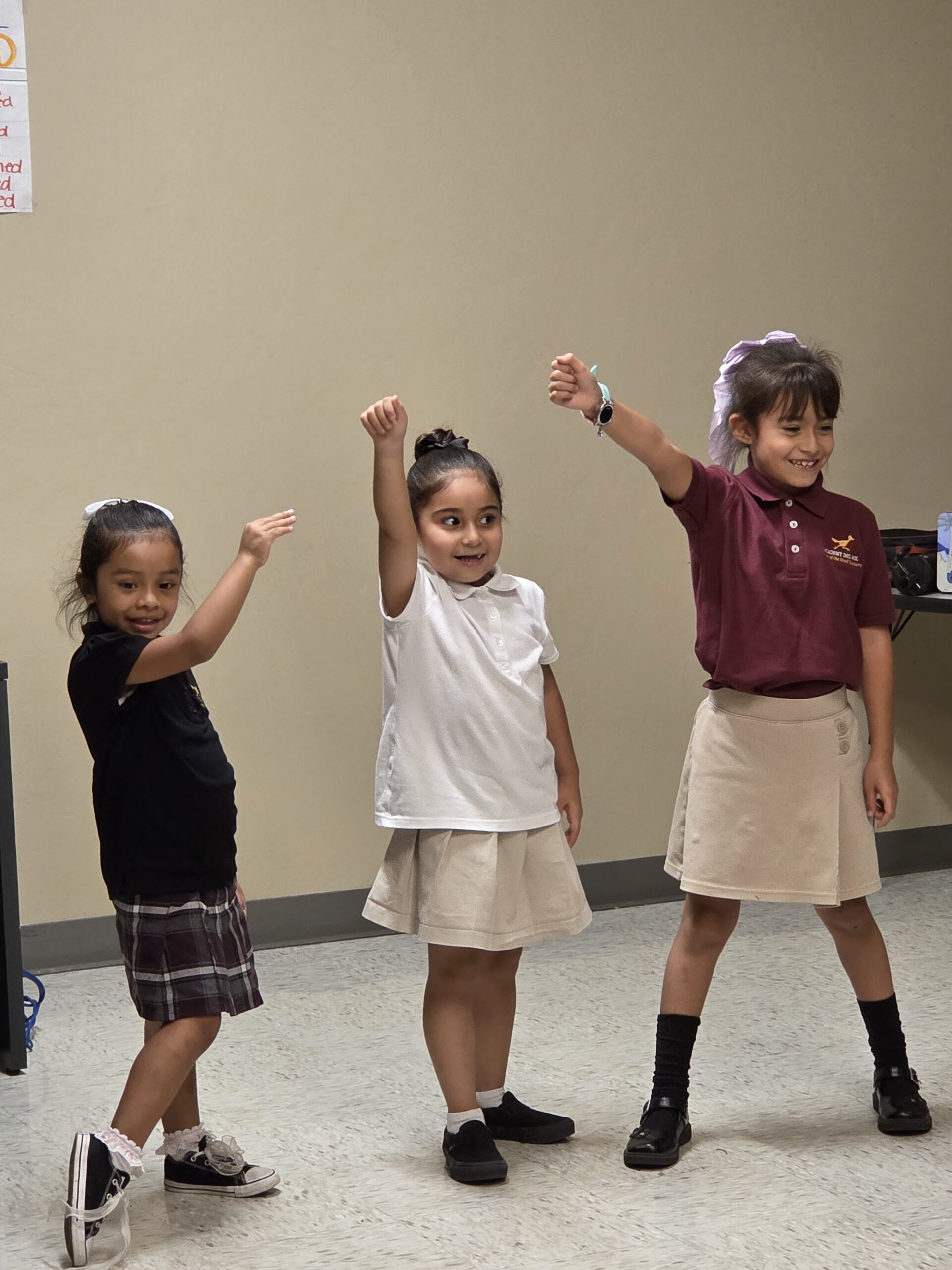
Dance combines physical activity with creativity, rhythm, and memory. When kids learn a short routine, they practice:
- Sequencing. Remembering steps in order, just like a story or a math process.
- Coordination. Using both sides of the body together.
- Listening skills. Following rhythm, tempo, and cues in the music.
- Self-expression. Showing feelings and ideas without words.
- Teamwork. Moving in sync with a group.
Dance also builds confidence. Performing, even for family in the living room, helps kids feel brave in front of others.
Brain Breaks: Small Moves, Big Results
A brain break is a short movement activity between periods of focused work. It can take just two or three minutes. Try these at home during homework:
- Freeze dance to one song
- Ten jumping jacks and five deep breaths
- Animal walks: bear crawl, frog jumps, or crab walk
- Mirror game: one person leads, the other copies
Try this: Set a timer for 15 to 20 minutes of homework, then take a two-minute brain break. Many kids get more done this way, not less.
Learning Songs With Motions
For younger kids, songs with hand motions turn learning into play. The alphabet, days of the week, counting, and even the water cycle all work well. Better yet, let your child make up the motions. Creating the movement helps them remember it.
Family Dance Parties
Not every dance session needs a lesson. Sometimes the best thing you can do is turn up the music after dinner and move together. Rotate who picks the song, try styles from different cultures, and let everyone invent a signature move.
Movement and Learning at School
At Academy Del Sol, movement is part of our fine arts approach, alongside music, visual art, and theater. Students move, perform, and create as part of everyday learning. Physical activity continues through athletics, too. Learn more about our Fine Arts program, athletics at Academy Del Sol, and why learning through play works.
Frequently Asked Questions
How does movement help kids learn?
Movement increases blood flow to the brain, helps kids refocus after sitting, and gives them another way to remember information, such as motions tied to words or ideas.
What is a brain break?
A brain break is a short, two- to three-minute movement activity between periods of focused work, like freeze dance, jumping jacks, or animal walks.
What are the benefits of dance for kids?
Dance builds coordination, memory, listening skills, teamwork, self-expression, and confidence.
A School Where Kids Learn by Moving and Creating
Academy Del Sol is a tuition-free K-8 Fine Arts charter school in Tucson. Music, art, movement, and performance are part of everyday learning. Reach out to schedule a tour, and bring your questions.
- Star Valley Campus (K-8, Firebirds): 7102 W. Valley Crest Pl., Tucson, AZ | (520) 789-7731
- Roger Road Campus (K-8, Roadrunners): 732 W. Roger Rd., Tucson, AZ | (520) 325-2800
Apply Now | Learn more: academydelsol.com | Hablamos español.
Move, create, learn.